
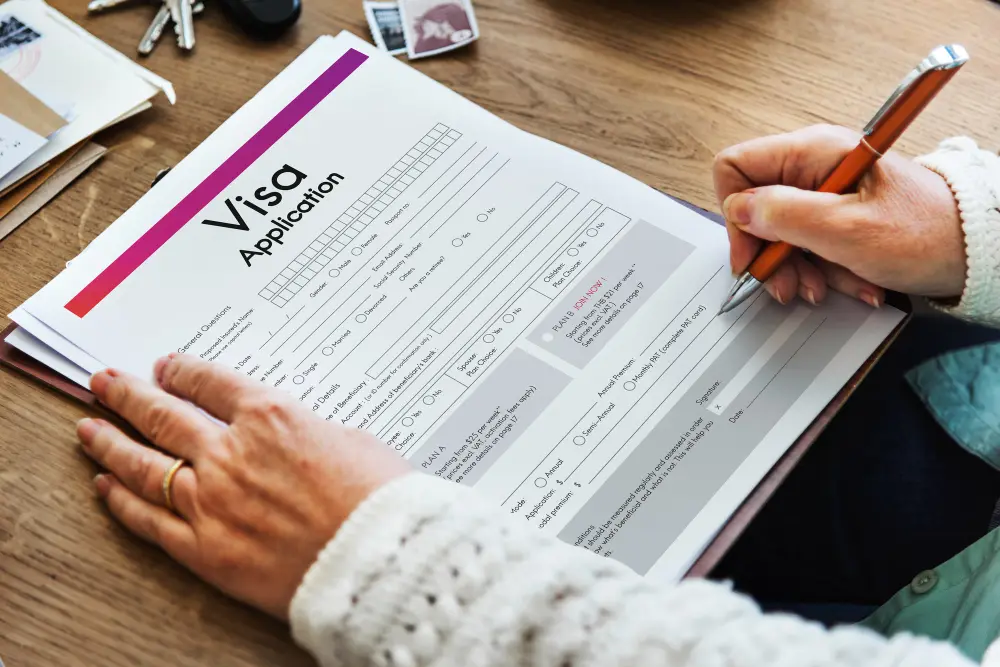
Most UAE visa applications don’t get delayed because of missing eligibility — they get delayed because of a blurry passport scan, a name that doesn’t quite match the passport, or a document nobody double-checked before hitting submit. If you’re preparing to apply, going in with a clear picture of what’s actually needed (and what commonly trips people up) saves you a second round of back-and-forth later.
This isn’t a generic “passport, photo, ticket” list. It walks through what’s commonly required, what depends on your specific situation, and the mistakes that cause the most avoidable delays.
The Core Document Checklist
Not every applicant submits every item below — what you actually need depends on your nationality, visa type, and how you’re applying. That said, these are the documents that come up repeatedly across UAE visa applications:
Commonly required for most applicants:
- A valid passport with sufficient remaining validity
- A clear passport copy or scan
- A recent passport-size photograph meeting current specifications
- A confirmed return or onward flight ticket
- Proof of accommodation (hotel booking or host details)
- Completed visa application details matching your passport exactly
May be required depending on your situation:
- Travel or health insurance
- Financial/supporting documents
- Sponsor or host documentation
- Proof of relationship (for family or dependent applications)
- Additional documents specific to your nationality or visa category
Treat the second list as situational rather than optional-for-everyone — some applicants won’t need any of it, others will need several items. Confirming which category you fall into before you start gathering documents saves a lot of last-minute scrambling.
Passport Requirements: What Actually Matters
Passport issues are one of the most common — and most avoidable — causes of delay. A few things worth checking before you submit anything:
- Validity. Most UAE visa applications require a passport with a minimum period of remaining validity beyond your travel dates. Exact requirements can vary by visa type and nationality, so confirm the current threshold rather than assuming.
- Scan quality. The copy needs to be fully visible, uncropped, and legible — all four corners, no glare, no shadows across the text.
- Matching details. Your name, date of birth, and passport number on the application must match your passport exactly, including spelling and formatting.
- Passport condition. Damaged, heavily worn, or altered passports can cause complications regardless of remaining validity.
None of this is complicated, but it’s exactly the kind of detail that gets rushed.
Photograph Requirements
Photo rejections are common and usually avoidable. Generally, the photo needs to be recent, taken against a plain background, with your full face clearly visible and no filters, shadows, or obstructions. Old photographs, cropped screenshots, or images pulled from a phone gallery instead of taken properly tend to cause problems.
Exact technical specifications (dimensions, background colour, file format) can differ slightly depending on the application channel you’re using, so it’s worth checking the specification shown at the point of application rather than relying on an old photo that worked for a previous visa.
Flight and Accommodation Documents
A confirmed return or onward ticket is generally expected — not necessarily a fully paid, non-changeable booking, but something that shows your intended departure. Before submitting, check that the dates align with your requested visa duration and that passenger details match your passport.
Accommodation proof works similarly. Whether it’s a hotel booking confirmation or details from a host or sponsor, the details should be verifiable and consistent with your stated dates of travel. A booking that doesn’t cover your full stay, or accommodation details that don’t match your other application information, is a common source of unnecessary questions.
Financial and Supporting Documents
Financial proof requirements vary significantly depending on visa type, application channel, sponsor arrangement, and nationality — there’s no single fixed figure that applies across every UAE visa category, and any source quoting one universal number should be treated cautiously. Where financial proof is requested, it’s generally meant to demonstrate that you can support your stay, sometimes through bank statements covering a recent period, and sometimes through sponsor documentation instead.
If you’re applying through a sponsor, tour operator, or visa service, some of these financial requirements may be handled differently than a fully independent application — it’s worth confirming exactly what applies to your specific route before assuming you need to gather bank statements yourself.
Requirements That Vary by Nationality and Visa Type
This is where a lot of generic checklists fall short — they present one list as if it applies to everyone. In practice, documentation can shift depending on:
- Your nationality
- The specific visa category you’re applying for
- Whether you have a sponsor or are applying independently
- The channel you’re applying through (airline, typing centre, online portal, agent)
- The purpose and length of your visit
- Your individual travel history
For example, some nationalities may be asked for additional supporting documents that others aren’t, and certain visa categories carry requirements that don’t apply to a standard short-stay tourist visa. Rather than assuming a checklist written for one nationality or visa type applies universally to yours, it’s worth confirming your specific requirements before applying — this is one of the areas where visa assistance genuinely helps, since it checks your situation directly instead of applying a generic template.
Common Application Mistakes
Most delays trace back to a handful of recurring errors:
Name and detail mismatches. Even minor spelling differences between your passport and application form can cause issues. Double-check every field against your passport, not against memory.
Blurry or incomplete scans. Cropped edges, glare, or low resolution are an easy fix if caught before submission — and a frustrating delay if not.
Insufficient passport validity. Applying with a passport close to its expiry, without checking the current validity requirement first, is avoidable with a five-minute check.
Outdated or non-compliant photographs. Reusing an old photo that worked for a different application doesn’t guarantee it’ll work again.
Missing supporting documents. Submitting without confirming which situational documents apply to you specifically.
Wrong visa category. Selecting a visa type that doesn’t match your actual travel purpose or duration causes complications later, not just at the application stage.
Inconsistent travel details. Flight and accommodation dates that don’t align with each other, or with the requested visa duration.
Unverifiable accommodation information. Booking details that can’t be confirmed, or that don’t cover the full stated stay.
Ignoring nationality-specific requirements. Assuming a checklist written for a different nationality applies to yours.
Relying on outdated information. UAE visa requirements are reviewed and updated periodically — following a guide or forum post from a previous year can mean working from rules that no longer apply.
Not checking previous UAE visa or residency history. Past UAE visa or residency records can be relevant depending on your application, so it’s worth being aware of your own history before applying.
Assuming payment guarantees approval. Paying an application fee doesn’t guarantee a visa is issued — approval depends on eligibility and the information submitted.
Why Applications Get Delayed or Rejected
It helps to separate the different categories of issues rather than treating them as one thing. Document and application errors — mismatched details, poor-quality scans, missing paperwork — are usually the most easily prevented, since they’re within the applicant’s control before submission. Eligibility-related issues depend on the specific visa category and your individual circumstances. Immigration or travel history factors are a separate category again, and not something a checklist can fully address.
No single mistake is always the reason behind a delay or rejection — it depends on the specific application and circumstances involved. What’s genuinely useful is minimising the errors that are within your control, since those are the ones most easily avoided with a careful review before submitting.
Final Pre-Submission Checklist
Before you submit, run through this:
☐ Passport validity checked against current requirements
☐ Passport copy is clear, complete, and uncropped
☐ Photograph meets current specifications
☐ Name, passport number, and date of birth match across all documents
☐ Flight/return ticket details are ready and dates align with your visa request
☐ Accommodation proof is ready and covers your full stay
☐ Insurance or other supporting documents checked, if applicable
☐ Correct visa category confirmed for your purpose and duration
☐ Nationality-specific requirements checked
☐ Previous UAE visa or residency status reviewed, where relevant
☐ Full application reviewed once more before submission
Frequently Asked Questions
What documents are typically needed for a UAE visit visa?
A valid passport, passport copy, recent photograph, return ticket, and accommodation proof are commonly requested, with additional documents depending on nationality, visa type, and sponsor arrangements.
How much passport validity do I need?
Requirements vary by visa type and nationality — check the current threshold at the time of application rather than relying on a fixed figure.
Do I need to show a bank balance?
Financial proof requirements differ depending on visa category, sponsor, and nationality. There’s no single universal amount that applies to every application.
Is travel insurance required?
This depends on the specific visa type and application channel — some categories require it, others don’t.
Why do UAE visa applications get rejected?
Reasons vary and can include document errors, mismatched details, eligibility issues, or incomplete information. No single cause applies to every case.
If you’d rather have your documents checked before submitting than find out about an issue afterwards, working with visa assistance or exploring your tourist visa options directly can catch problems a self-check might miss.
